
"total output"
2000 article(s) found

Grill the flavor of Brazilian coffee and Malawi coffee and their output value
Professional coffee knowledge exchange more coffee bean information please pay attention to the coffee workshop (Wechat official account cafe_style) Malawi (Malawi) well-known representative coffee: Malawi is a small country in southeastern Africa, is also a landlocked country not near the sea, its coffee is mostly grown in the northern plateau, but the production is not large. But although it is not near the sea, it is on the map.

The planting area and output of Pu'er coffee account for half of the country.
At present, the planting area and output of Pu'er coffee has accounted for half of the country, among which Nestle has become the largest buyer of Pu'er coffee (commercial coffee rice), accounting for about 1/3 of the total Pu'er coffee every year.

Development status of Xinzhai Coffee in Lujiang, Baoshan. How about Yunnan small Coffee Brand-Lujiangba Coffee
Professional coffee knowledge exchange more coffee bean information please pay attention to the superior natural geographical and climatic conditions of the coffee workshop (Wechat official account cafe_style), making Yunnan small grain coffee favored by foreign businessmen for its excellent quality, and the export volume accounts for more than 50% of the country's coffee exports, ranking first in the country. But for a long time, 90% of the exports are low-priced raw coffee beans.
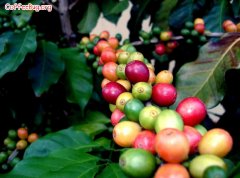
Variety classification of high-quality coffee beans and knowledge coffee
Coffee beans (Coffee Bean) can be divided into three types, namely Arabica-coffee contains caffeine of about 1% per cent by weight. Generally speaking, the better quality and more expensive coffee beans come from coffee beans grown by Elaraby. It accounts for 3/4 of the world's output and is of good quality, because the coffee tree itself is sensitive to heat and humidity.

Top 10 countries of origin of coffee beans in the world-boutique coffee
If growing coffee beans is an Olympic sport, it is definitely an arduous marathon. It is said to be a marathon not only because African countries have long been dominant in the project. If you want to become a big coffee producer, you must have strong economic strength, complete infrastructure and a lot of government investment. At the same time, you must also ensure that your land and nature

South America Brazil's well-known representative coffee mountain coffee brother is better than the well-known representative coffee brother.
South America Brazil (Brazil) well-known representative coffee: Santos Brazil is the world's largest coffee producer, with the first total output in the world, accounting for 1 beat 3 of the world's total output, and its main production is concentrated in the central and southern provinces. The area of mixed coffee grown in Brazil is flat, and most of the coffee is below 1200 meters above sea level, and it is also heavily sheltered, because the fruits are the same when harvested.

Flavor description of Yunnan Pu'er Katim AAA Coffee Bean
Yunnan Pu'er Katim AAA Coffee Bean Flavor description Variety introduction Coffee cultivation in China is concentrated in Yunnan and Hainan provinces. Yunnan has a large output, with an annual output of about 26000 tons in recent years, accounting for 90 per cent of the national output. It is said that Yunnan coffee came from the French 70 or 80 years ago. The main variety is Arabica Arabica, the so-called small seed coffee, commonly known as Yunnan.

What are the main producing areas of South American coffee beans? what are the flavor characteristics of Brazilian coffee beans?
Professional coffee knowledge exchange more coffee bean information please follow the coffee workshop (Wechat official account cafe_style) Front Street-South America Coffee producing area brief introduction Brazil, as the world's largest coffee producer, ranks first in the world in total output, accounting for about 30% of the global total production, mainly concentrated in the central and southern provinces. Brazil has a relatively flat terrain and a wide planting area of coffee trees.

Introduction to Renas Manor in El Salvador Coffee Manor
UCAFES:Organization of coffee producity cooperatives of el salvador, 25% of the total output; UCRAPROBEX:Organization of Land Reform Coffee Producing Processing Cooperatives, including small farmers who had no land before the land reform, accounted for 10% of the total output; ABECAFE:Association of

History of introduction and expansion of Coffee in early China (5)
1. From the first peak period of the development of China's coffee industry (1952-1961) to the late 1940s, according to recorded figures, there are 2173.33 hectares of rubber plantations in Hainan Island, with a total of 867600 rubber trees, with an annual output of 199,000 tons of dry rubber, and more than 300,000 coffee plants. the annual output of coffee beans is 1 ton. According to a survey in the early 1950s, there was a large amount of coffee left in Fushan area of Chengmai County, with a total of 70,000.

New Black Gold Market Yunnan Pu'er Coffee Yue International
Tea-picking girls of the Lahu nationality in Yunnan's main Pu'er tea producing area, Qianhai County, pick Rain Water tea. (Xinhua News Agency file photo) Coffee grown by coffee farmers in Pu'er, Yunnan Province. (ZXs file photo) Chinese Pu'er coffee cup contestants use siphon pots to make coffee during the competition. (Xinhua News Agency file photo) in addition to traditional tea, coffee is making great strides into the mainland beverage market in recent years.
Introduction of World Coffee producing area to Kenya (3)
Coffee planting conditions and producing areas: Kenya has unique conditions for growing coffee: year-round high temperature in the equatorial region, abundant sunshine, abundant precipitation, obvious dry and wet seasons formed by the savanna climate, coffee producing areas are mostly highlands of more than 2000 meters, the soil is rich in organic matter, and the temperature drop in the highlands at night forms a moderate temperature difference between day and night, all of which are superior.

Which variety of coffee beans is better? which brand of fine coffee should I buy?
Brazil: the most important coffee producer in the world, accounting for 1x3 of the world's total output, and about 10 states in the vast territory produce coffee beans in large quantities. Brazilian coffee is round, moderately sour and has a strong sweet taste. It is known for its smooth taste and is considered an indispensable ingredient for mixed coffee. Colombia: the world's second largest coffee producer, accounting for the world's total output
Coffee common sense that coffee people need to know
1. Coffee is one of the three major beverage crops in the world (coffee, tea and cocoa). Its output ranks first among the three beverage crops and is the second largest raw material product after oil in international trade. Coffee originated in north-central Africa, has been widely distributed in Asia, Africa, Latin America, Oceania and other 76 countries and regions. The global coffee planting area in 2008 is about
Boutique coffee Brazilian coffee
Brazilian coffee generally refers to coffee produced in Brazil. There is a wide variety of Brazilian coffee, the vast majority of which are unwashed and sun-dried, classified according to the name of the state of origin and the port of transport. Brazil has 21 states and 17 states produce coffee, but four of them produce the largest, accounting for 98% of the country's total output. Brazilian coffee has a low sour taste, which goes well with coffee.
Individual coffee is recommended to meet Brazilian coffee
Brazilian coffee Brazils to distinguish it from Milds coffee. The vast majority of Brazilian coffee is unwashed and sun-dried and is classified according to the name of the state of origin and port of transport. Brazil has 21 states and 17 states produce coffee, but four of them produce the largest, accounting for 98% of Brazil's total output. They are: Parana, SaoPaulo and rice.
Introduction to Brazilian Coffee
Brazilian coffee generally refers to coffee produced in Brazil. There is a wide variety of Brazilian coffee, the vast majority of which are unwashed and sun-dried, classified according to the name of the state of origin and the port of transport. Brazil has 21 states and 17 states produce coffee, but four of them produce the largest, accounting for 98% of the country's total output. Brazilian coffee has a low sour taste, which goes well with coffee.

Is there a distinction between male and female Coffee beans in Thailand? a brief History of Coffee in Thailand
Professional coffee knowledge exchange more coffee bean information Please pay attention to the coffee workshop (Wechat official account cafe_style) Coffee beans are not male and female. A few years ago, this view became popular in various tourist attractions in Southeast Asia. Later, someone traced the source to a tour guide in Bali. They described round beans as male beans and flat beans as female beans, so as to entice tourists to buy cheaper coffee at a high price.
The development of coffee the trend of the world coffee market
The annual turnover of raw coffee beans is the second largest in the world. Coffee is produced in more than 70 countries around the world, with an annual output of 1 million bags. The development of the coffee industry has provided employment opportunities for 100 million people around the world. The international coffee market is at a mature stage. The coffee production of the exporting member countries of the International Coffee Organization accounts for more than 97% of the world's total output. While annual retail sales exceed $70 billion.

Brief introduction of Yunnan small Coffee planting Technology how to brew Brand Taste and Flavor
A brief introduction to the description of how to brew the brand taste and flavor of Yunnan small-grain coffee planting technology Pu'er 's Yunnan Coffee Trading Center is located in the main coffee producing area in China, and its trump card is close to coffee producing areas. it is understood that in recent years, the local coffee industry has been vigorously developed. regard it as an important support for the construction of a national green economy test and demonstration zone, an important part of the development of agriculture with plateau characteristics, and driving farmers.